
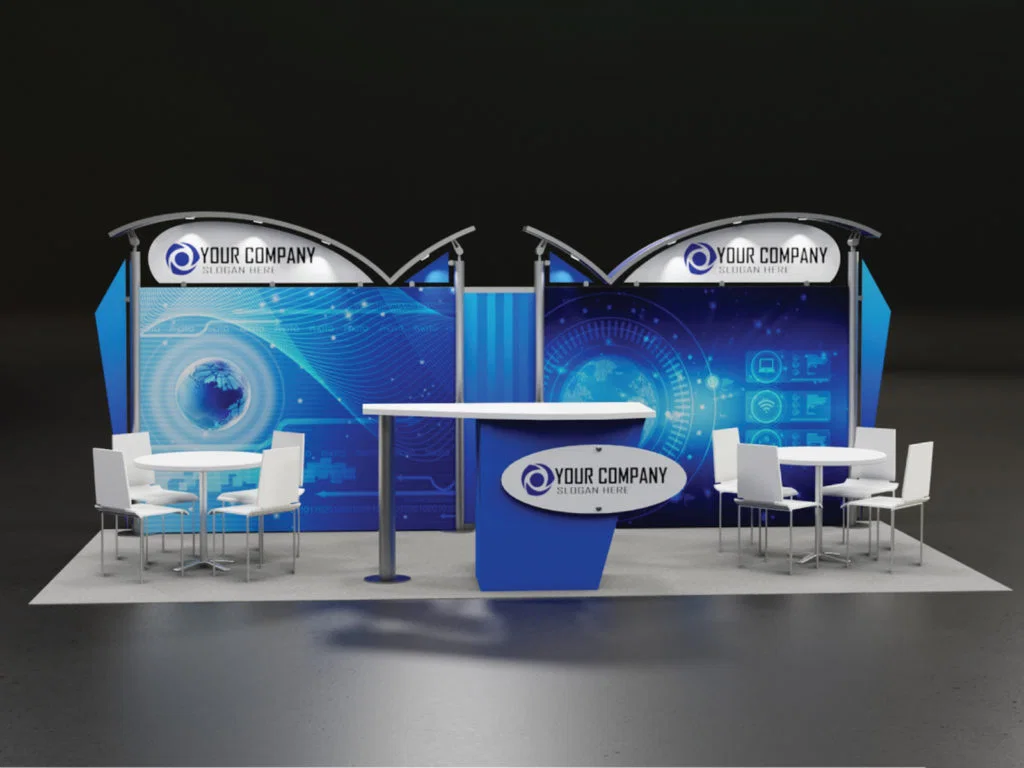
Inline Booth Displays drive most of the early decisions: rental versus custom, fabrication lead time, freight class, and rigging requirements.
The footprint, the corner exposure, and the structural elements you want above the booth all flow from the choice. So does the on-site labor count.
Send us the floor plan and the asset goals you're carrying into Kansas City and we'll match the displays to the right build path.
First pass
What we focus on
- Pick rental, hybrid, or custom against the program length, not the first show.
- Verify ceiling height, column placement, and rigging access at the venue.
- Spec graphics so reskinning between shows is a swap, not a rebuild.
- Pre-build and dry-fit before the truck loads.
- Document closeout so the next install inherits a working punch list.
What drives the Kansas City calendar
Trade show weeks in Kansas City compress decisions.
Visit KC's meetings venue hub markets Kansas City as a place for premier event venues and explicitly filters inventory by Downtown/Convention Center, Crown Center, and other metro districts.
Kansas City neighborhoods and event districts
Johnson County Convention Strip covers Overland Park, Lenexa, Olathe, Leawood.
Crown Center and Pershing Corridor runs across Crown Center, Union Station, Pershing Road corridor.
How Kansas City floor operations work
Labor in Kansas City runs venue-by-venue, not citywide.
The convention-center sources document venue-controlled service categories: Smart City is the current exclusive internet and wi-fi provider, Aramark controls food and beverage and merchandise services, and the guide identifies exclusive electrical and rigging workflows.
The buildings that host Kansas City events
The plan has to match the specific building.
Hy-Vee Arena, a large-format venue in the West Bottoms with more than 100,000 square feet of column-friendly floor space, comfortably handles trade shows, consumer expos, and sporting events.
Scope on a inline booth displays project
A bad one has many, because they weren't.
Out of scope by default are show organizer fees, booth lease costs paid directly to the show, staff travel and per diems, and any custom software or data-capture tooling the client runs on its own stack. Those stay on the client side and plug into the project through coordination, not rebilling.
How a project runs
After the brief, the work turns to the building itself.
With venue details locked, production runs.
One named show-site lead runs the install.
Throughout show hours, the on-site lead stays present.
Pricing and scheduling
Every project has the same cost drivers.
Rental programs run on 8 to 12.
Outcomes we optimize for
Exhibitors who measure programs seriously track leads, floor-booked meetings, and post-show pipeline. The build and the install are upstream inputs to those KPIs.
The post-show debrief is where the numbers get connected back to the physical booth. Which demo station drew traffic, which meeting area closed more conversations, which graphic zone attracted dwell time — that feedback shapes the next build rather than getting lost.
What makes our work different
Working with a Kansas City-based shop matters most when something goes wrong on-site. Solutions live within driving distance instead of on another coast.
Over a multi-show calendar, the compound value of a single team shows up in fewer surprises. The second install is faster than the first, the third is faster than the second, and by the fourth the project runs on memory and documentation rather than first-principles planning.
Questions about Inline Booth Displays
Do you work at Hy-Vee Arena?
Yes.
How does labor work in Kansas City?
It runs venue by venue.
How much lead time is ideal?
Custom builds run best with 16 to 20 weeks of lead time. Rentals take 8 to 12 weeks.
What information kicks off a project?
The show, the venue, the booth number, the dates, and a target budget range. From those, an initial scope and a realistic cost come back within a few days.
Who runs the booth on-site?
One named show-site lead runs the install, the show hours, and the strike. That person carries the floor plan and the punch list from crates to doors and reports up once a day.
Can the booth travel to the next city on our calendar?
Same structure, swappable graphics, standard crates.
What happens if something breaks during show hours?
The on-site lead handles it.