
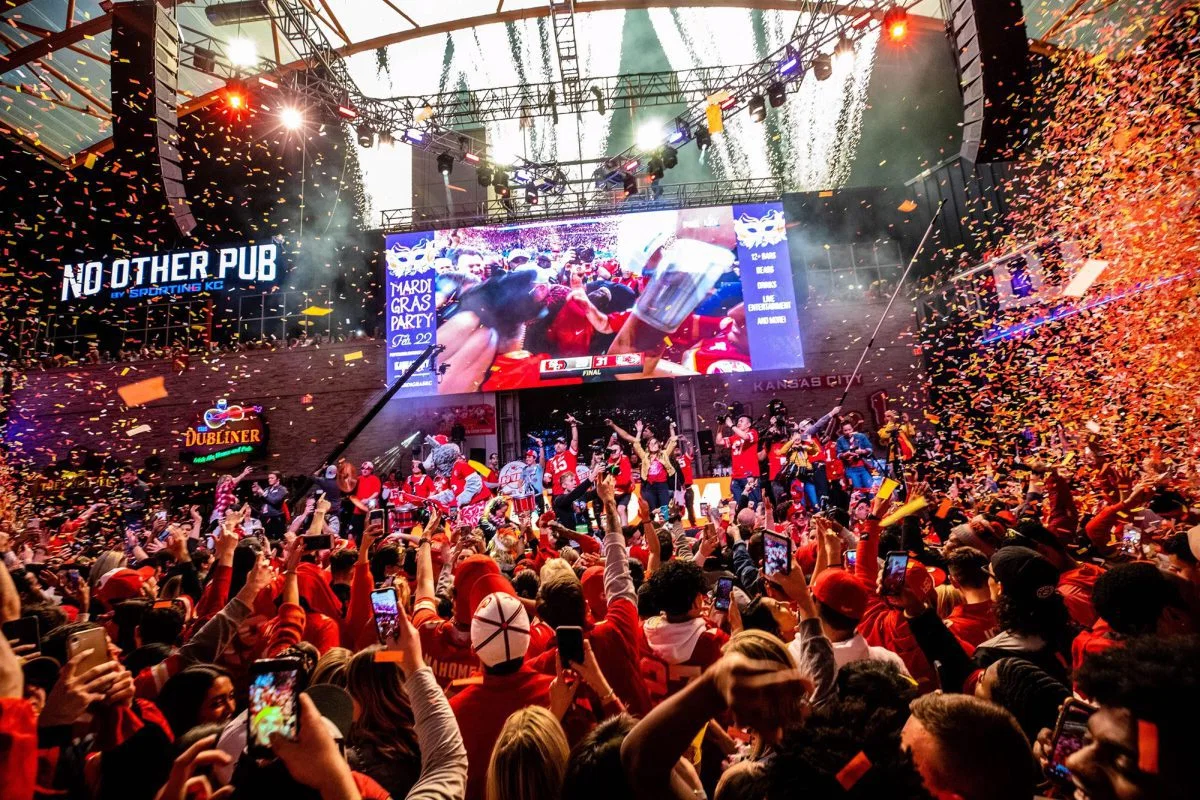
Power and Light District Kansas City MO matters because the location changes freight timing, staffing, and how easy it is to get people in and out.
That is why Crown Center Exhibit Hall, the mo, and Registration and Entry Experience Buildouts have to be planned together against one access pattern, not in separate notes.
The plan gets sharper when Kansas City's active meetings market is built into the venue schedule, freight path, and staffing plan.
First pass
What we focus on
- Confirm which venues in Power and Light District Kansas City MO carry the show.
- Plan freight against the actual dock access, not a generic Downtown assumption.
- Keep an on-site lead present from move-in through strike.
About Power and Light District Kansas City MO
The mo is part of the Kansas City event market. Shows and meetings book here alongside the larger Kansas City calendar.
Trade show work in the mo shares most of its structure with larger Kansas City projects.
Operational rules on the Kansas City floor
Kansas City floor operations follow the venue's own manual.
The facility has no contracts with any unions and has never experienced a strike, which supports careful language that Kansas City's main convention campus is not governed by a single blanket union-only rule.
Kansas City venues we work
The plan has to match the specific building.
Kansas City Convention Center is the primary Downtown convention campus, covering trade shows, conferences, ballroom programs, and citywide event infrastructure in the Kansas City core.
What drives the Kansas City calendar
Kansas City is a working trade show market.
Scope gets tighter; standards don't.
Line items on a typical project
The handoffs on a project in the mo matter almost as much as the line items. Design has to hand a build-ready drawing to fabrication. Every handoff is a place quality can drop.
Those run alongside the engagement rather than inside it.
What an engagement actually looks like
Everything downstream hinges on those answers.
Once scope is clear, the venue work begins.
The install phase has one owner on the floor.
Strike and closeout happen the same day.
What it costs and how fast it moves
Six variables drive the cost: custom versus rental, booth footprint and complexity, venue-specific labor and rigging fees, graphics scope and substrate, freight distance and timing, and the number of on-site supervision days.
A clean schedule starts 4 to 5 months out for custom work and 2 to 3 months for rentals. Shorter lead times are workable but push rush premiums and limit material choices.
How project performance gets measured
Most programs in Kansas City are evaluated on lead-capture volume, meetings booked on the floor, and qualified-pipeline attribution after the show. The booth is a means to those numbers — it is not the number itself.
Client teams sometimes want the booth to carry the pipeline on its own, but the best-performing programs treat the booth as a platform and put real operators on it. On-floor conversation discipline moves the KPIs more than any scenic decision.
How we're built to run your project
Local fabrication means real-time problem-solving. A graphic that needs to be reprinted at 6 a.m.
Consistency across show dates is the other reason to hire local. The same crew that built the booth runs the install, knows the pack-out, and catches the small things — a missing hardware pack, a graphic edge that needs reseating, a storage crate routed to the wrong bay — without needing the client team to intervene.
Questions about Power and Light District Kansas City MO
Do you work at LongHouse at the Arboretum & Botanical Gardens?
Yes. LongHouse at the Arboretum & Botanical Gardens is an Overland Park indoor-outdoor venue used for receptions, executive offsites, and small brand events that benefit from a garden setting.
How does labor work in Kansas City?
It runs venue by venue.
How much lead time is ideal?
Custom builds run best with 16 to 20 weeks of lead time. Rentals take 8 to 12 weeks.
What information kicks off a project?
The show, the venue, the booth number, the dates, and a target budget range. From those, an initial scope and a realistic cost come back within a few days.
Who runs the booth on-site?
One named show-site lead runs the install, the show hours, and the strike. That person carries the floor plan and the punch list from crates to doors and reports up once a day.
Can the booth travel to the next city on our calendar?
Same structure, swappable graphics, standard crates.
What happens if something breaks during show hours?
The on-site lead handles it.