
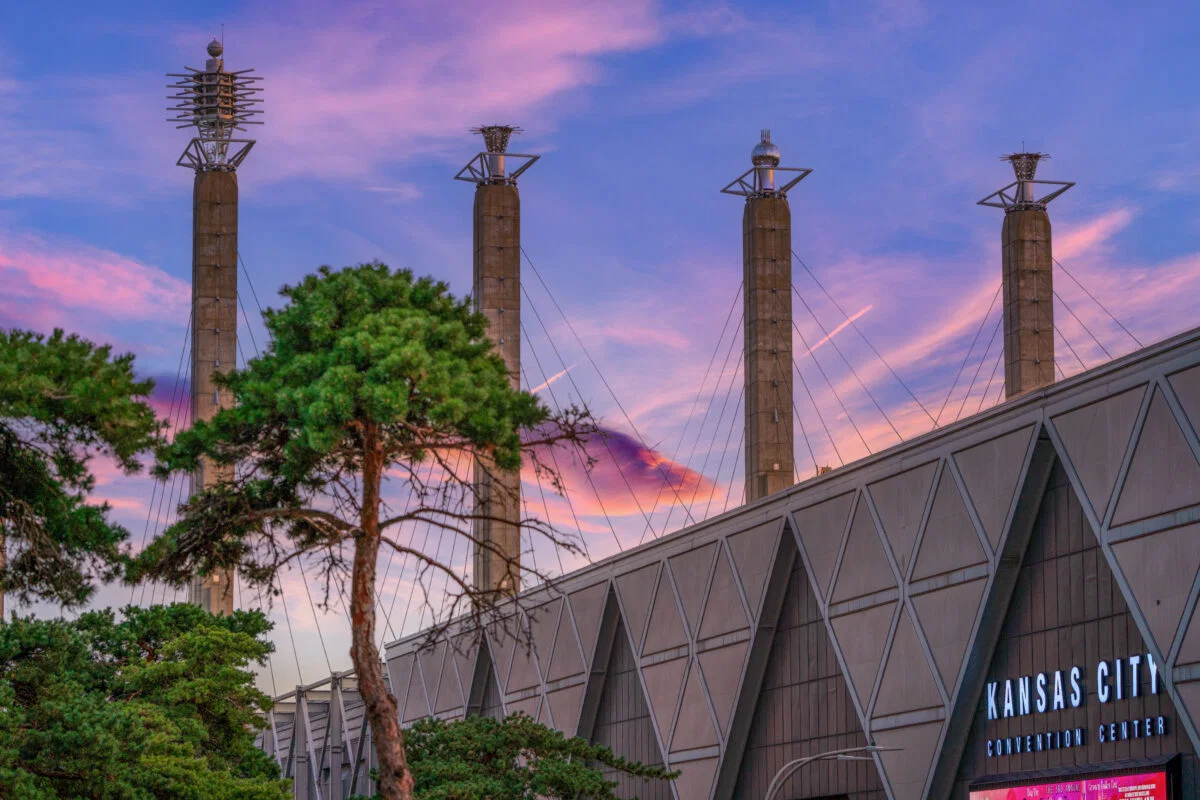
Kansas City Convention Center runs with its own dock schedule, rigging procedure, and floor plan. Decisions made before move-in shape what's possible during show hours.
The exhibitor manual and the published labor rules for the center are the source of truth — every plan we hand back is checked against them before it leaves the shop.
Brief us with the show name, the booth number or footprint, the in/out dates, and any AV or hanging-sign requirements and we'll come back with a sequence that fits the building.
First pass
What we focus on
- Stage the dock choreography before the first truck lands.
- Keep hall control and aisle pressure in the same plan.
- Respect the utility rules and vendor approvals early.
- Use the move-in windows to protect the crew sequence.
- Treat closeout as part of the hall plan, not a late task.
Working at Kansas City Convention Center
The center is the primary Downtown convention campus, covering trade shows, conferences, ballroom programs, and citywide event infrastructure in the Kansas City core.
The campus sits in the Downtown / Convention Center District and its exhibitor packet locks in dock windows, labor jurisdictions, and rigging approvals well before show week.
Projects at the center start with its published floor plan, dock schedule, and service-order deadlines. Everything downstream — build, freight, install, labor — is planned against those real inputs.
What's included in the project scope
Individual projects layer or remove items based on scope.
Scope boundary is as important as scope inclusion.
Kansas City labor and venue services
There is no single labor model for Kansas City trade shows.
Stagehands generally handle construction and dismantling not done by exhibitors, teamsters normally unload trucks and deliver freight to booths, and union stagehands are required when the Music Hall is used.
Kansas City as a trade show city
Trade shows in Kansas City move fast.
The center's current FAQ and client guide document exhibitor services, freight rules, exclusive internet and utility workflows, and show-floor labor practices, which indicates a mature convention infrastructure rather than a generic ballroom market.
The process from start to finish
After the brief, the work turns to the building itself.
Install days are owned by a single on-site lead.
Throughout show hours, the on-site lead stays present.
Strike and closeout happen the same day.
Cost and lead time
Every project has the same cost drivers.
Lead time drives everything. Custom: 16 to 20 weeks. Rental: 8 to 12.
Outcomes we optimize for
Most programs in Kansas City are evaluated on lead-capture volume, meetings booked on the floor, and qualified-pipeline attribution after the show. The booth is a means to those numbers — it is not the number itself.
A week after the show, the booth's actual floor performance is already clearer than any pre-show projection. We document those observations alongside the technical closeout so the next cycle inherits real signal, not nostalgia.
Why Trade Show Services of Kansas City
Trade Show Services of Kansas City keeps the work local.
Consistency across show dates is the other reason to hire local. The same crew that built the booth runs the install, knows the pack-out, and catches the small things — a missing hardware pack, a graphic edge that needs reseating, a storage crate routed to the wrong bay — without needing the client team to intervene.
Questions about Kansas City Convention Center
How does labor work in Kansas City?
It runs venue by venue.
How much lead time is ideal?
Custom builds run best with 16 to 20 weeks of lead time. Rentals take 8 to 12 weeks.
What information kicks off a project?
The show, the venue, the booth number, the dates, and a target budget range. From those, an initial scope and a realistic cost come back within a few days.
Who runs the booth on-site?
One named show-site lead runs the install, the show hours, and the strike. That person carries the floor plan and the punch list from crates to doors and reports up once a day.
Can the booth travel to the next city on our calendar?
Same structure, swappable graphics, standard crates.
What happens if something breaks during show hours?
The on-site lead handles it.