
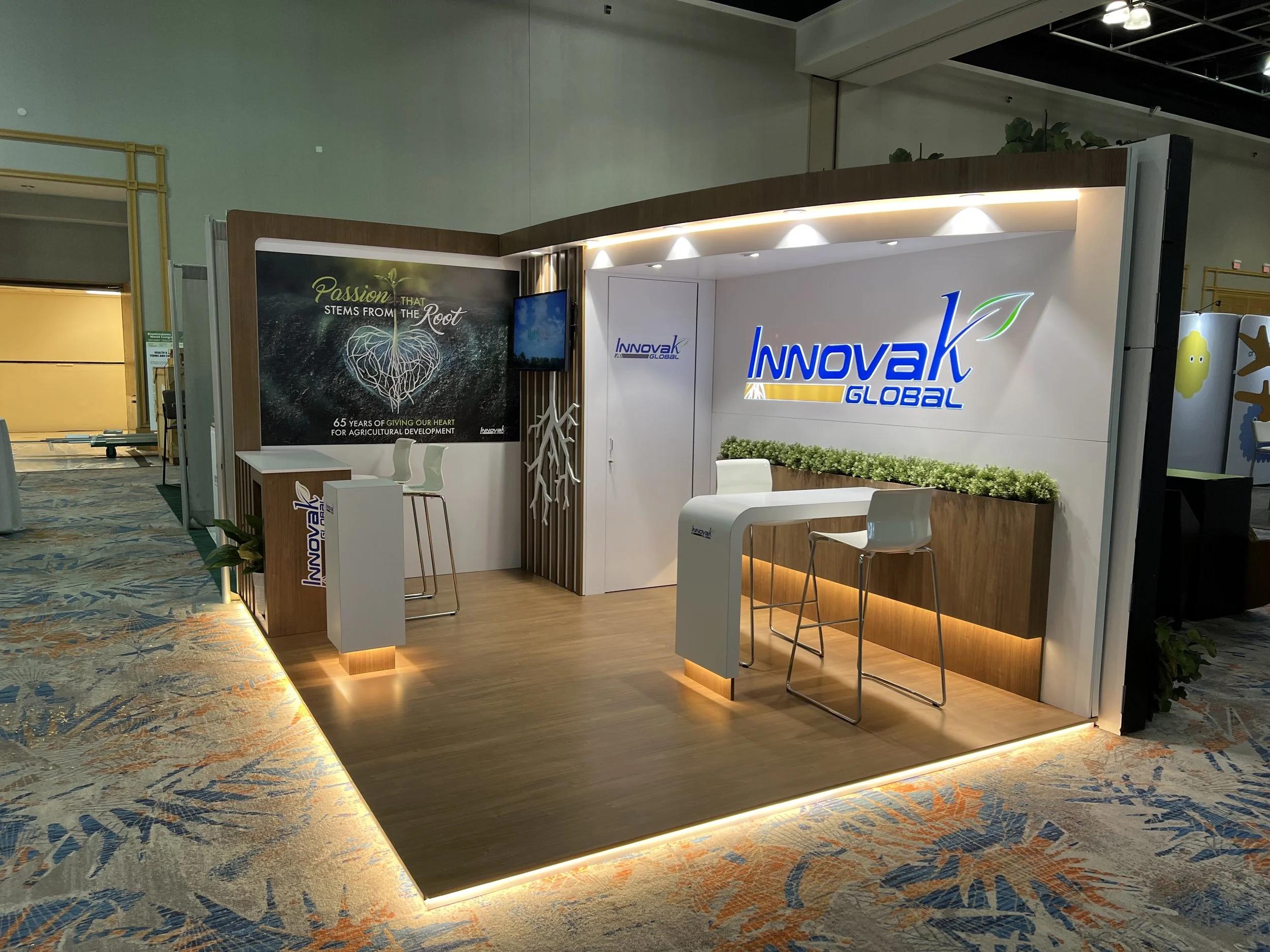
Trade Show Booth Rentals is one of the practical levers we work in Kansas City — the place where shop output, venue rules, and the show calendar meet.
The brief that gets the cleanest result names the show, the venue, the dates, the booth footprint, and the outcome you want measured after closeout.
First pass
What we focus on
- Lock the shop calendar before fabrication starts.
- Match labor calls to the venue's published rules, not a generic union assumption.
- Sequence freight so the truck unloads in install order.
- Stand a single show-site lead over install, show hours, and strike.
- Finish closeout the same day so the next Trade Show Booth Rentals engagement starts cleaner.
Kansas City as a trade show city
Trade shows in Kansas City move fast. Major venues book out months in advance, freight windows run tight, and the exhibitors who win their weeks are the ones who arrive with a plan already in hand.
The attendees vary by show — some weeks draw regional operators, others pull international buyers in for a single conference — but the floor mechanics stay consistent. Every booth needs graphics production, show services, labor calls, and a plan for the specific building it's landing in.
the Overland Park Convention Center with 60,000 square feet of exhibition halls plus a connected hotel ecosystem, and it markets Overland Park as being within a day's drive of more than 55 million Americans.
a 70,000-square-foot clear-span exhibition hall, 11,000 square feet of meeting space, and a location five minutes from MCI Airport.
Kansas City convention venues and meeting properties
Every Kansas City show takes place in a specific building with its own rules. The venues below come up most often on our production calendar.
A venue walk — either in person or via the published floor plan — is the step that reveals constraints no spec sheet shows. Column spacing, real ceiling height at the grid point, and dock access shape what's actually buildable.
Kansas City Marriott Downtown is a convention hotel with the meeting inventory citywide groups need for ballroom functions, breakouts, and convention-district overflow.
Sheraton Kansas City Hotel at Crown Center is a large Crown Center hotel venue with heavy ballroom, breakout, and exhibit-linked meeting inventory near Union Station and the Downtown convention district.
Why Trade Show Services of Kansas City
Trade Show Services of Kansas City operates out of Kansas City with a full in-house production shop. Custom fabrication, rental inventory, graphics production, and show-site labor live under one roof.
Local fabrication means real-time problem-solving. A graphic that needs to be reprinted at 6 a.m. On install day is a same-morning fix, not a three-day shipping delay.
Consistency across show dates is the other reason to hire local. The same crew that built the booth runs the install, knows the pack-out, and catches the small things — a missing hardware pack, a graphic edge that needs reseating, a storage crate routed to the wrong bay — without needing the client team to intervene.
Kansas City labor and venue services
There is no single labor model for Kansas City trade shows. The right approach depends on the specific venue and the show organizer's contracts.
Practically, that means pulling the current exhibitor manual for every show and confirming a handful of items in writing: which tasks the venue's house crews cover, which tasks the show's general contractor covers, and what an exhibitor or their appointed contractor can handle without escalation.
The facility has no contracts with any unions and has never experienced a strike, which supports careful language that Kansas City's main convention campus is not governed by a single blanket union-only rule.
The main Kansas City event areas
The Johnson County Convention Strip area runs through Overland Park, Lenexa, Olathe, Leawood. The Overland Park Convention Center and its attached or nearby hotel venues make Johnson County a distinct suburban meetings market with both exhibit and breakout demand.
Crown Center and Pershing Corridor — Crown Center, Union Station, Pershing Road corridor — is a different environment. This cluster matters for conference overflows, sponsor events, receptions, and hospitality programs tied to the Sheraton, Union Station, and the broader Crown Center campus.
What's included in the project scope
A full engagement covers scope development, fabrication or rental, graphics, show services, logistics, and on-site execution from move-in through dismantle.
What shows up in most budgets: structure, graphics, AV, show-service orders through the venue, labor, freight, supervision days, and closeout. Individual projects layer or remove items based on scope.
Good execution comes from keeping the team small and the handoffs short. Every extra vendor in the chain adds a communication layer and a place where details get lost.
Multi-show programs add asset management: storage, refurbishment, graphic swaps, and scheduled re-kitting so the booth rolls cleanly from Kansas City to the next city on the calendar.
Scope boundary is as important as scope inclusion. Show organizer fees, client-side staff costs, and any tools the client already owns are handled outside the engagement. Defining that boundary up front prevents billing surprises later.
The process from start to finish
First step on any project is pinning down the show, the floor plan, the deadlines, and what success actually looks like. Everything downstream hinges on those answers.
Once scope is clear, the venue work begins. Exhibitor manual, dock times, utility order IDs, rigging submissions for hanging elements, and labor calls all get locked against the venue's actual rules.
Production covers fabrication, graphics, AV spec, rentals, and crew chief assignment. It is the longest phase of most projects and the one where timelines are either protected or lost.
The install phase has one owner on the floor. That person handles the labor calls, the graphics questions, the sequence adjustments, and the daily update.
Show-hours coverage is part of every engagement — not a premium add-on. On-floor support keeps the booth running while the client team runs the pipeline.
Strike and closeout happen the same day. Storage labels, outbound manifests, vendor performance notes, and a written debrief go out within 24 hours of doors closing.
Cost and lead time
An honest quote itemizes the variables. There is not a single price — there is a configuration.
Six variables drive the cost: custom versus rental, booth footprint and complexity, venue-specific labor and rigging fees, graphics scope and substrate, freight distance and timing, and the number of on-site supervision days.
A clean schedule starts 4 to 5 months out for custom work and 2 to 3 months for rentals. Shorter lead times are workable but push rush premiums and limit material choices.
What a successful project looks like
A project runs well when install clears the venue's published window, all show services land as ordered, the booth performs across every show day without pulling the client team off pipeline work, and strike clears the dock before the next occupant loads in.
Most programs in Kansas City are evaluated on lead-capture volume, meetings booked on the floor, and qualified-pipeline attribution after the show. The booth is a means to those numbers — it is not the number itself.
Client teams sometimes want the booth to carry the pipeline on its own, but the best-performing programs treat the booth as a platform and put real operators on it. On-floor conversation discipline moves the KPIs more than any scenic decision.
Questions about Trade Show Booth Rentals
Do you work at Union Station Kansas City?
Yes. Union Station Kansas City is a historic transportation hub turned event campus, with grand halls and exhibit space that fit gala, science, and mixed-use programs.
How does labor work in Kansas City?
It runs venue by venue. The facility provides best-in-class cleaning, staffing, and managed labor services, which makes the airport corridor operationally different from the Downtown convention-center campus.
How much lead time is ideal?
Custom builds run best with 16 to 20 weeks of lead time. Rentals take 8 to 12 weeks.
What information kicks off a project?
The show, the venue, the booth number, the dates, and a target budget range. From those, an initial scope and a realistic cost come back within a few days.
Who runs the booth on-site?
One named show-site lead runs the install, the show hours, and the strike. That person carries the floor plan and the punch list from crates to doors and reports up once a day.
Can the booth travel to the next city on our calendar?
Same structure, swappable graphics, standard crates.
What happens if something breaks during show hours?
The on-site lead handles it.