
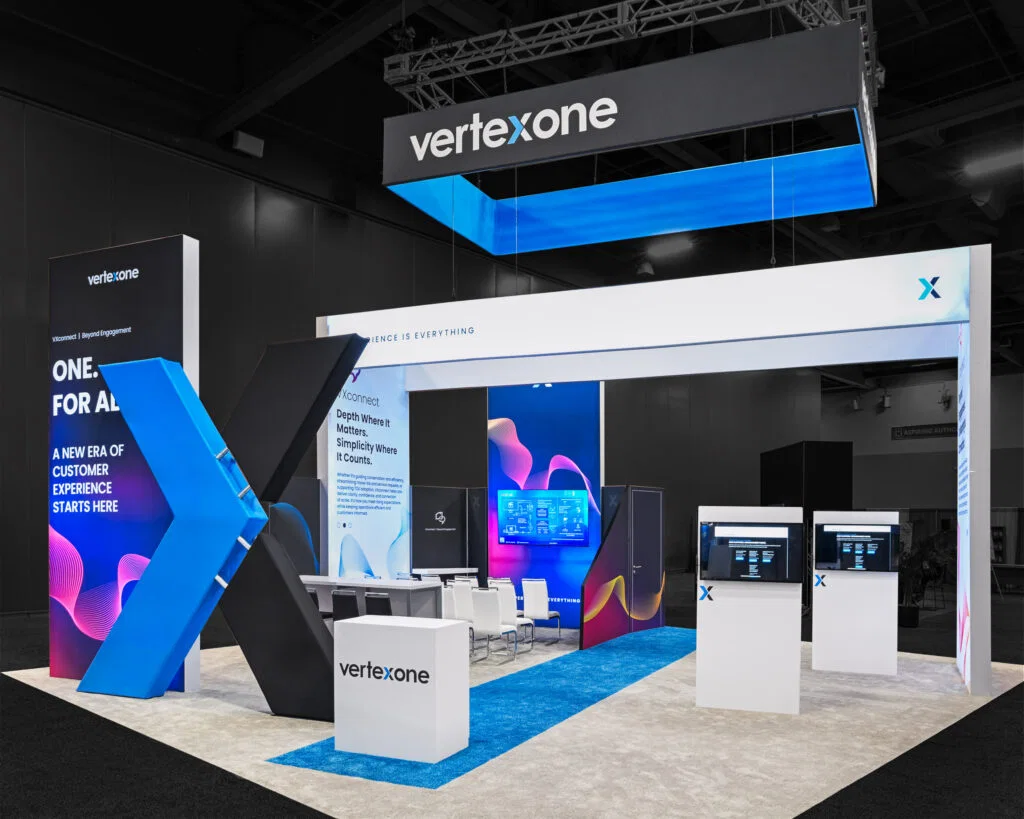
Technology Trade Show Services bring their own audience profile, lead-capture pattern, and compliance posture into a Kansas City show plan.
Booth design, demo space, and qualifying flow shift when the audience is the services. So does the staffing model and the post-show follow-up.
Share the show, the audience target, and what counts as a qualified conversation after closeout, and we'll align the booth and the floor plan to it.
First pass
What we focus on
- Tune booth messaging to how Technology Trade Show Services buyers qualify a vendor on the floor.
- Build demo space that matches the actual product or service being shown.
- Right-size staffing for how long a qualifying conversation actually takes.
- Wire lead capture into the CRM Our team will work after the show.
- Plan compliance language and disclosures against the audience.
What drives the Kansas City calendar
Kansas City is a working trade show market.
Trade show weeks in Kansas City compress decisions.
Kansas City venues we work
Kansas City events cluster around a small number of venues, and each one has a different personality on the floor.
The plan has to match the specific building.
Operational rules on the Kansas City floor
Kansas City floor operations follow the venue's own manual.
The reviewed Overland Park, KCK, Union Station, and hotel meeting sources confirm active venue inventory and event support, but they do not publish a metro-wide union-only or non-union rule.
Kansas City neighborhoods and event districts
The Downtown Convention Core area runs through Downtown Kansas City, Convention Center District, Power & Light District, Crossroads Arts District.
Kansas Side Civic and Community Venue Band runs across Kansas City, KS, Village West, Bonner Springs.
Scope on a technology trade show services project
A bad one has many, because they weren't.
Out of scope by default are show organizer fees, booth lease costs paid directly to the show, staff travel and per diems, and any custom software or data-capture tooling the client runs on its own stack. Those stay on the client side and plug into the project through coordination, not rebilling.
What an engagement actually looks like
After the brief, the work turns to the building itself.
With venue details locked, production runs.
One named show-site lead runs the install.
Throughout show hours, the on-site lead stays present.
What it costs and how fast it moves
Every project has the same cost drivers.
Rental programs run on 8 to 12.
How project performance gets measured
Exhibitors who measure programs seriously track leads, floor-booked meetings, and post-show pipeline. The build and the install are upstream inputs to those KPIs.
The post-show debrief is where the numbers get connected back to the physical booth. Which demo station drew traffic, which meeting area closed more conversations, which graphic zone attracted dwell time — that feedback shapes the next build rather than getting lost.
How we're built to run your project
Working with a Kansas City-based shop matters most when something goes wrong on-site. Solutions live within driving distance instead of on another coast.
Over a multi-show calendar, the compound value of a single team shows up in fewer surprises. The second install is faster than the first, the third is faster than the second, and by the fourth the project runs on memory and documentation rather than first-principles planning.
Questions about Technology Trade Show Services
Do you work at Sheraton Kansas City Hotel at Crown Center?
Yes.
How does labor work in Kansas City?
It runs venue by venue.
How much lead time is ideal?
Custom builds run best with 16 to 20 weeks of lead time. Rentals take 8 to 12 weeks.
What information kicks off a project?
The show, the venue, the booth number, the dates, and a target budget range. From those, an initial scope and a realistic cost come back within a few days.
Who runs the booth on-site?
One named show-site lead runs the install, the show hours, and the strike. That person carries the floor plan and the punch list from crates to doors and reports up once a day.
Can the booth travel to the next city on our calendar?
Same structure, swappable graphics, standard crates.
What happens if something breaks during show hours?
The on-site lead handles it.