
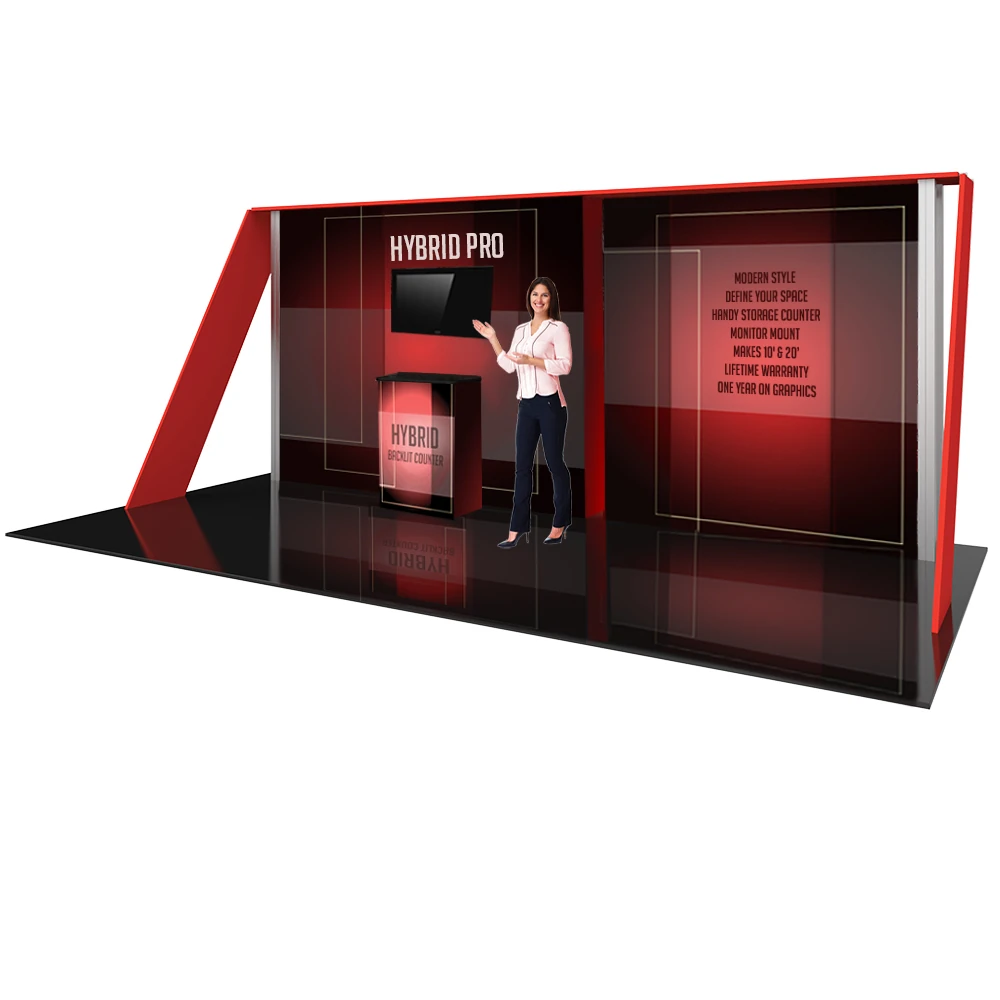
So does the on-site labor count.
Send us the floor plan and the asset goals you're carrying into Kansas City and we'll match the booths to the right build path.
First pass
What we focus on
- Spec graphics so reskinning between shows is a swap, not a rebuild.
- Pre-build and dry-fit before the truck loads.
- Document closeout so the next install inherits a working punch list.
Kansas City as a trade show city
Trade shows in Kansas City move fast.
Scope gets tighter; standards don't.
Kansas City convention venues and meeting properties
The plan has to match the specific building.
Bartle Hall anchors the Kansas City Convention Center campus and carries the heaviest trade show, expo, and citywide convention move-ins Downtown.
Kansas City labor and venue services
There is no single labor model for Kansas City trade shows.
Stagehands generally handle construction and dismantling not done by exhibitors, teamsters normally unload trucks and deliver freight to booths, and union stagehands are required when the Music Hall is used.
The main Kansas City event areas
Kansas City, KS, Village West, Bonner Springs, Wyandotte County Lake form the Kansas Side Civic and Community Venue Band cluster.
Northland and Airport Corridor — Kansas City North, Riverside, Parkville — is a different environment.
Line items on a typical project
Individual projects layer or remove items based on scope.
The handoffs on a the booths project matter almost as much as the line items. Design has to hand a build-ready drawing to fabrication. Every handoff is a place quality can drop.
Those run alongside the engagement rather than inside it.
The process from start to finish
After the brief, the work turns to the building itself.
With venue details locked, production runs.
One named show-site lead runs the install.
Throughout show hours, the on-site lead stays present.
Cost and lead time
Every project has the same cost drivers.
Rental programs run on 8 to 12.
Outcomes we optimize for
Exhibitors who measure programs seriously track leads, floor-booked meetings, and post-show pipeline. The build and the install are upstream inputs to those KPIs.
The post-show debrief is where the numbers get connected back to the physical booth. Which demo station drew traffic, which meeting area closed more conversations, which graphic zone attracted dwell time — that feedback shapes the next build rather than getting lost.
Why Trade Show Services of Kansas City
Working with a Kansas City-based shop matters most when something goes wrong on-site. Solutions live within driving distance instead of on another coast.
Over a multi-show calendar, the compound value of a single team shows up in fewer surprises. The second install is faster than the first, the third is faster than the second, and by the fourth the project runs on memory and documentation rather than first-principles planning.
Questions about Modular Trade Show Booths
Do you work at GEHA Field at Arrowhead Stadium?
Yes.
How does labor work in Kansas City?
It runs venue by venue.
How much lead time is ideal?
Custom builds run best with 16 to 20 weeks of lead time. Rentals take 8 to 12 weeks.
What information kicks off a project?
The show, the venue, the booth number, the dates, and a target budget range. From those, an initial scope and a realistic cost come back within a few days.
Who runs the booth on-site?
One named show-site lead runs the install, the show hours, and the strike. That person carries the floor plan and the punch list from crates to doors and reports up once a day.
Can the booth travel to the next city on our calendar?
Same structure, swappable graphics, standard crates.
What happens if something breaks during show hours?
The on-site lead handles it.