
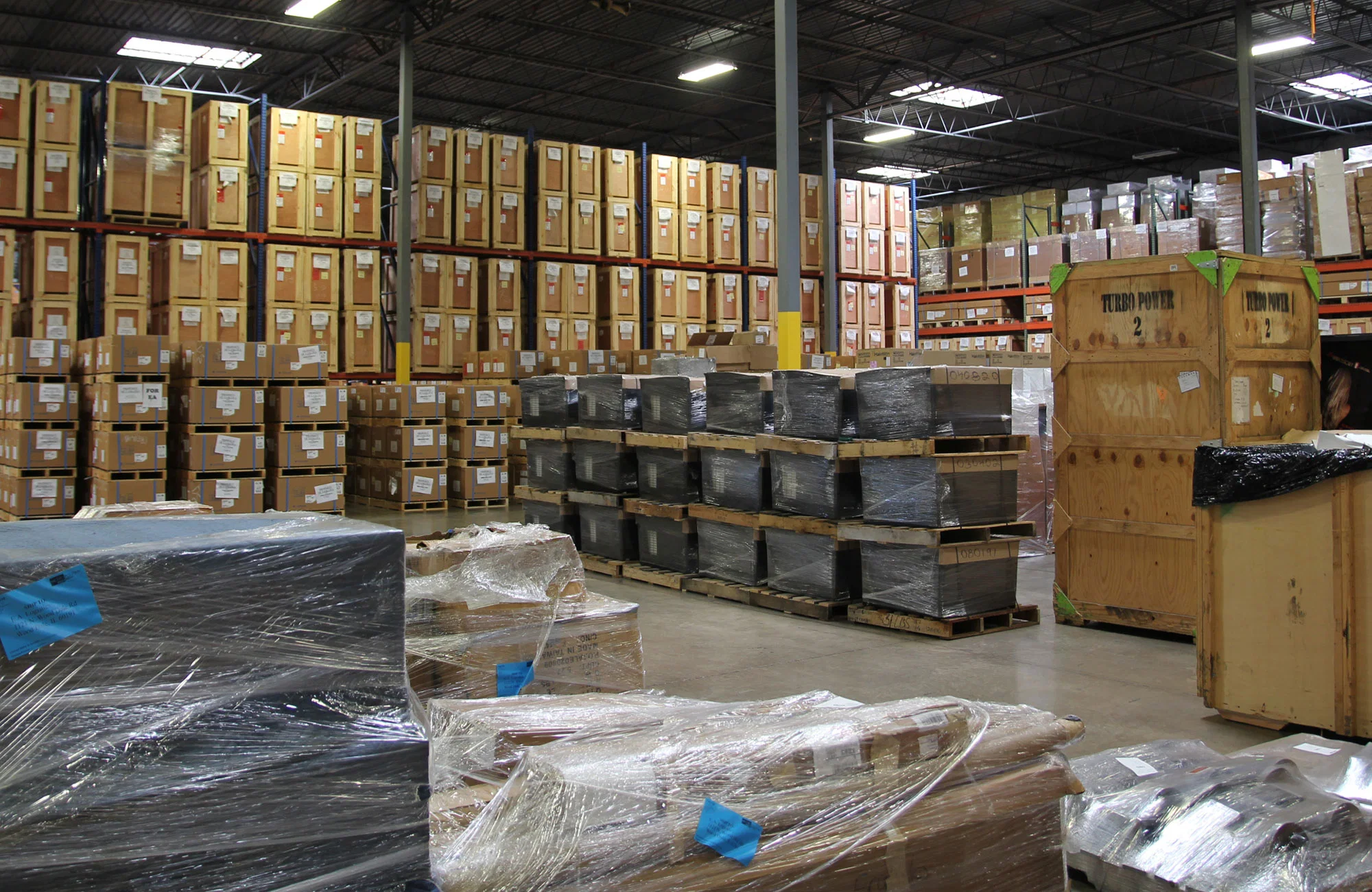
Exhibit Storage and Refurbishment is the section buyers use when they need the next event to start with assets that are already accounted for.
That means Crown Center Exhibit Hall, Crown Center Kansas City MO, and the refurbishment have to be tracked through repair, return, and reissue.
The plan gets stronger when Johnson County adds a major suburban convention option is reflected in the labeling system, asset map, and show-site handoffs.
First pass
What we focus on
- Keep inventory labels current across every return.
- Separate repair, refurbish, and retire decisions early.
- Track crates so the next shipment is easier to load.
- Use the warehouse turn to confirm what is actually reusable.
- Finish with a clear asset list before the next show date lands.
The Kansas City event landscape
Kansas City is a working trade show market.
the Overland Park Convention Center with 60,000 square feet of exhibition halls plus a connected hotel ecosystem, and it markets Overland Park as being within a day's drive of more than 55 million Americans.
Kansas City venues we work
Kansas City events cluster around a small number of venues, and each one has a different personality on the floor.
The plan has to match the specific building.
Operational rules on the Kansas City floor
Kansas City floor operations follow the venue's own manual.
The facility does not provide labor and carts, so exhibitor and contractor planning should assume labor is arranged through show-specific workflows rather than a house labor pool.
Kansas City neighborhoods and event districts
Overland Park, Lenexa, Olathe, Leawood form the Johnson County Convention Strip cluster.
Crown Center and Pershing Corridor runs across Crown Center, Union Station, Pershing Road corridor.
What's included in the project scope
For programs that repeat, asset management becomes part of the engagement — storage, graphic rotation, refurbishment, and re-crating are planned rather than one-off.
Scope boundary is as important as scope inclusion.
What an engagement actually looks like
Venue coordination comes next.
Install days are owned by a single on-site lead.
During show hours, the booth is a live operating space.
That document drives the next booking.
What it costs and how fast it moves
Cost scales with how it is built, how big it is, what the venue charges for its own services, what the graphics look like, how far the crates travel, and how many days the team stays on-site.
Lead time drives everything. Custom: 16 to 20 weeks. Rental: 8 to 12.
What a successful project looks like
Trade show ROI is measured at the lead and pipeline level.
A week after the show, the booth's actual floor performance is already clearer than any pre-show projection. We document those observations alongside the technical closeout so the next cycle inherits real signal, not nostalgia.
How we're built to run your project
Trade Show Services of Kansas City keeps the work local.
The difference from a national vendor shows up at the dock.
Questions about Exhibit Storage and Refurbishment
Do you work at Kauffman Stadium?
Yes.
How does labor work in Kansas City?
It runs venue by venue.
How much lead time is ideal?
Custom builds run best with 16 to 20 weeks of lead time. Rentals take 8 to 12 weeks.
What information kicks off a project?
The show, the venue, the booth number, the dates, and a target budget range. From those, an initial scope and a realistic cost come back within a few days.
Who runs the booth on-site?
One named show-site lead runs the install, the show hours, and the strike. That person carries the floor plan and the punch list from crates to doors and reports up once a day.
Can the booth travel to the next city on our calendar?
Same structure, swappable graphics, standard crates.
What happens if something breaks during show hours?
The on-site lead handles it.